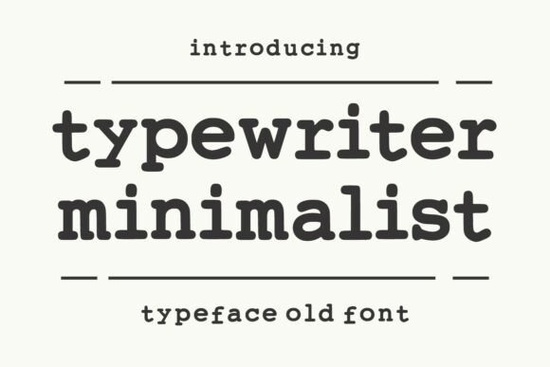
If you've been searching for a typeface that brings the warmth of old typewritten pages without looking messy or outdated, Typewriter Minimalist might be exactly what your next project needs. This clean, monospaced vintage typewriter font draws from classic mechanical typewriters and old publishing aesthetics while keeping things sharp and readable for modern use.
What Makes a Typewriter Font "Minimalist"?
Most typewriter fonts lean into the rough, imperfect look of worn-out keys and faded ink ribbons. That works for some projects, but it can be hard to read at smaller sizes or feel too chaotic for clean layouts. The Typewriter Minimalist font takes a different approach. It keeps the nostalgic character of classic typewritten text the even spacing, the rounded terminals, the subtle mechanical feel but strips away the noise. The result is a typeface that feels handcrafted and professional at the same time.
Its balanced proportions make it easy to use in body text, headings, and short quotes alike. You get that vintage personality without sacrificing clarity.
Who Is This Font Best Suited For?
This font works well for a wide range of creative people and projects. Here are some common use cases:
- Book cover designers who want a retro editorial look
- Print-on-demand sellers creating journals, planners, or notebook covers
- Wedding and event stationery designers looking for classic invitation typography
- Small businesses building vintage or artisan brand identities
- Social media managers who want quote graphics and posts that stand out
- Crafters and hobbyists making printable wall art, greeting cards, or scrapbook elements
Basically, if your design needs a touch of old-school charm with a modern, tidy feel, this typeface fits the bill.
Where Does Typewriter Minimalist Work Best?
Because of its monospaced structure and clean lines, this font performs well across many formats:
- Editorial layouts magazine spreads, zines, and book interiors
- Branding logos, business cards, packaging for artisan or handmade products
- Digital content blog headers, email templates, social media posts
- Stationery letterheads, envelopes, thank-you cards
- Posters and prints typographic wall art, event flyers, menu designs
It pairs nicely with both sans-serif and serif typefaces. If you want to build a more layered typographic system, try combining it with something like The Youth, which offers a different kind of classic serif feel that complements the mechanical quality of Typewriter Minimalist.
How Does It Compare to Other Vintage-Style Fonts?
There's no shortage of vintage and retro fonts available, so what makes this one worth considering? A few things stand out:
- Monospaced design Every character takes up the same width, which creates that authentic typewriter grid. This is especially useful for alignment-heavy layouts and tabular designs.
- High readability Unlike many distressed or grunge typewriter fonts, this one stays clean even at small sizes. That makes it practical for both print and screen.
- Versatile aesthetic It doesn't lean too hard into any single era. You can use it for a 1960s office look, a literary journal vibe, or a modern minimalist brand without it feeling out of place.
If you're comparing options, it's worth looking at other serif and display fonts in the same family. Fonts like Semika offer a more traditional serif style that could work alongside Typewriter Minimalist for projects that need visual variety within a cohesive look.
Tips for Pairing and Using This Font
Getting the most out of any typewriter font comes down to thoughtful pairing and layout choices. Here are a few practical suggestions:
- Pair it with a clean sans-serif for body text. The monospaced structure works best as a display or accent font rather than long paragraphs of running text.
- Use generous line spacing. Monospaced fonts often need a bit more breathing room than proportional typefaces.
- Stick to moderate font sizes for body use. It shines at headline and subheadline sizes but can feel dense in very small body text.
- Test it in both color and black-and-white before finalizing. Vintage typewriter fonts sometimes look stronger in monochrome.
- Try it on real mockups place it on a journal cover, a poster, or a business card to see how it actually reads in context.
What Should You Check Before Buying?
Before purchasing any font, it helps to go through a quick checklist:
- Does the license cover your intended use (commercial projects, POD platforms, client work)?
- Are all the characters you need included (numbers, punctuation, accented letters)?
- Does it work in your preferred design software (Canva, Illustrator, Photoshop, etc.)?
- Have you tested it at the sizes you'll actually use?
- Does it pair well with fonts you already own?
You can find Typewriter Minimalist on Creative Fabrica, along with thousands of other fonts, graphics, and design resources. While you're browsing, you might also want to check out Semika and The Youth for more serif and vintage-inspired options to round out your font library.
Next step: Download the font, open your design tool of choice, and set your project name or headline in Typewriter Minimalist at three different sizes. If it looks right on your screen, it'll look right in print. Start building from there.
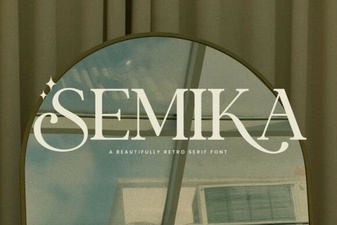 Semika Font: Elegant Typography for Creative Projects
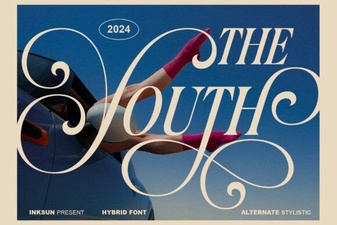 The Youth Font – Elegant Serif Typeface for Modern Design
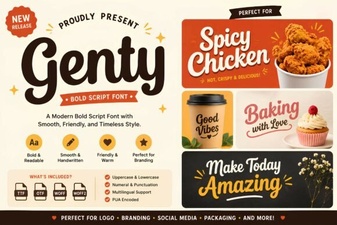 Genty Font Free Download - Elegant Script Typeface
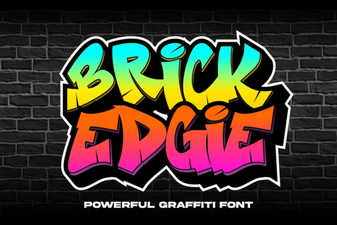 Brick Edgie Font Bold Geometric Display Typography for Designs
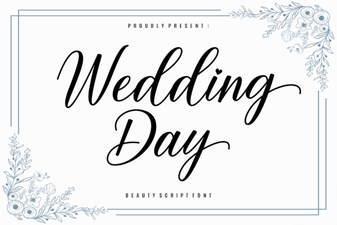 Elegant Wedding Day Font Ideas for Beautiful Invitations
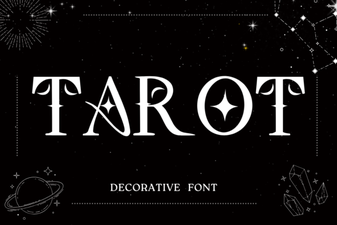 Enchanting Tarot Fonts for Mystical Design Projects